
Operational Assessment, Workflow Design, and Automation Insights
Practical articles on how growing businesses clarify their operations before scaling with automation or AI.
Start with our practical guides to Business Process Mapping, Accounting Process Automation, and Reporting Automation.
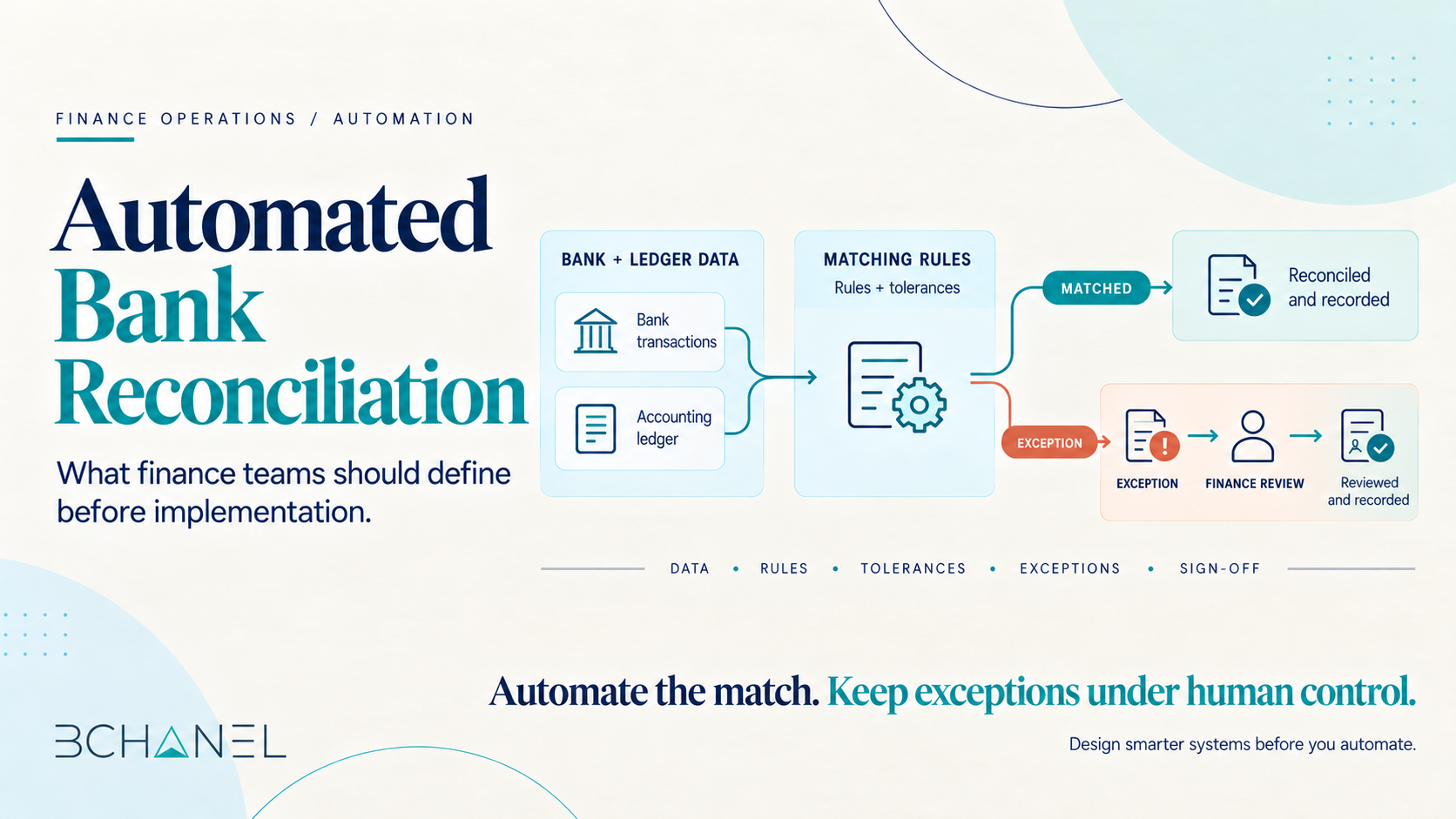
Automated Bank Reconciliation: What Finance Teams Should Define Before Implementation
Automated bank reconciliation can reduce manual matching and accelerate financial close—but only when finance teams define the data, rules, tolerances, exceptions, approvals, and audit trail first.
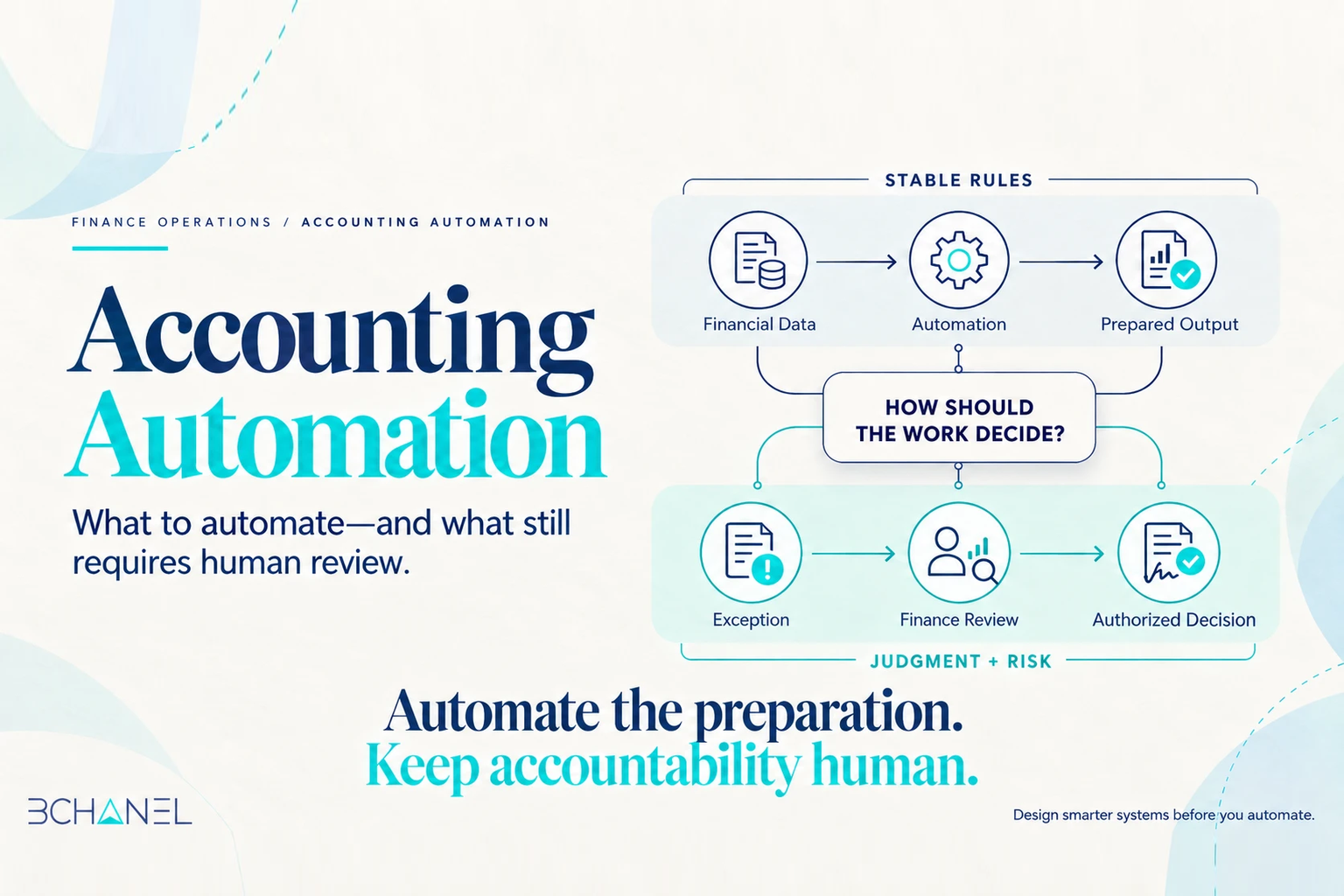
Accounting Automation: What to Automate and What Still Requires Human Review
Accounting automation can collect, match, validate, and prepare financial information. This guide explains which tasks are ready for automation—including accounts payable and reconciliation—and where finance must retain human judgment and accountability.
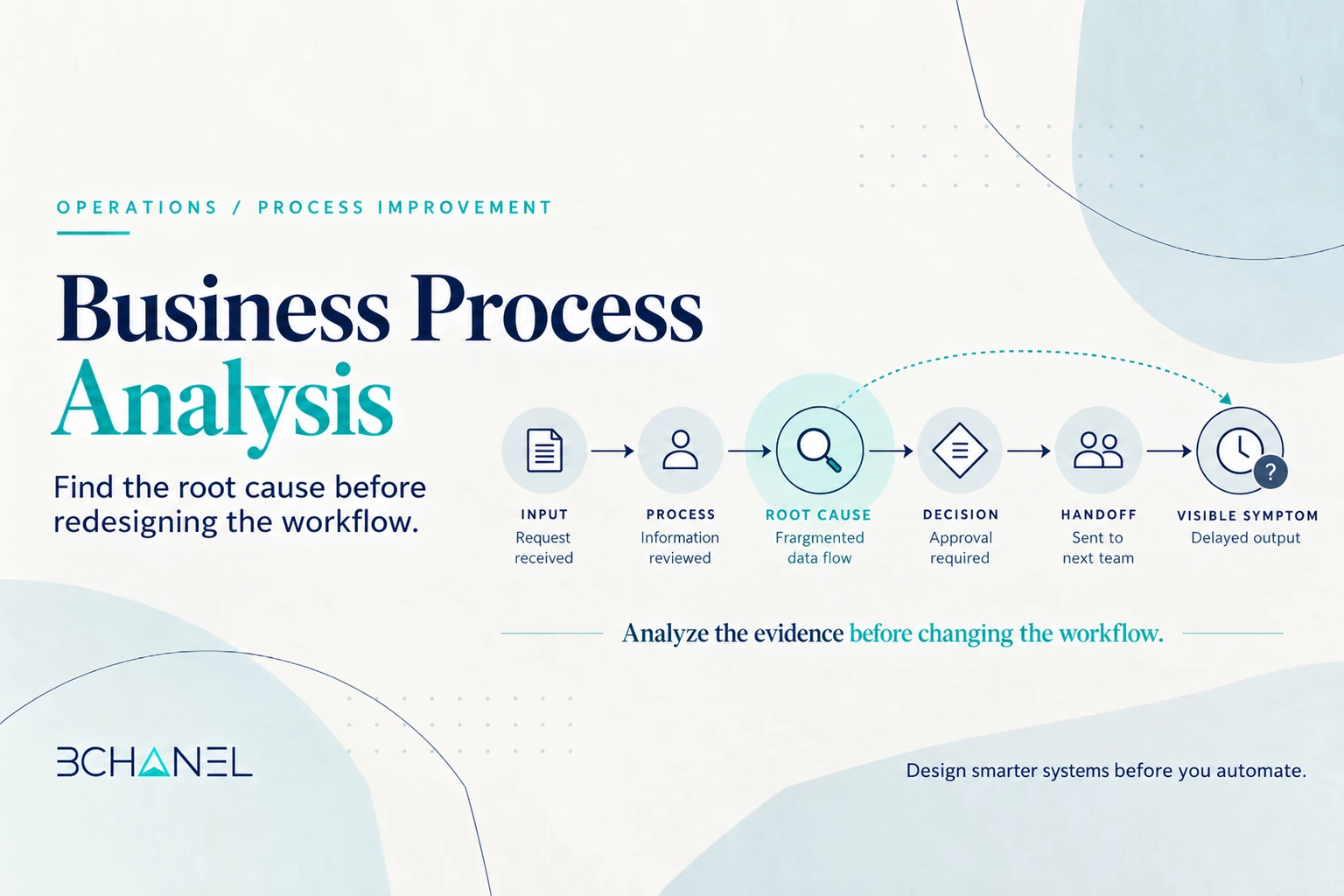
Business Process Analysis: How to Find Root Causes Before Redesigning a Workflow
Learn how to map a current-state workflow, separate operational symptoms from root causes, and determine what should be fixed before redesign or automation begins.
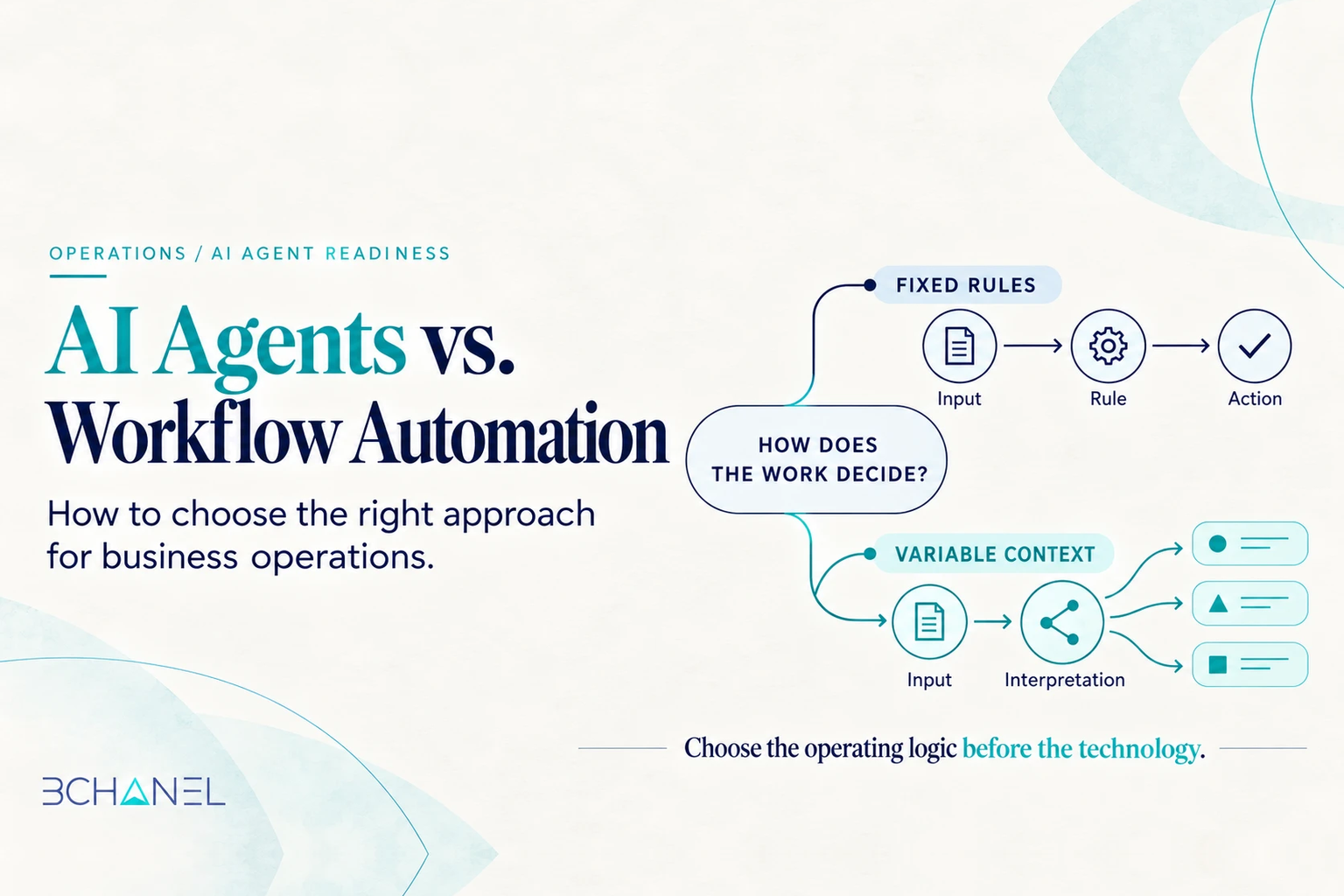
AI Agents vs. Workflow Automation: How to Choose the Right Approach for Business Operations
Should your workflow use fixed rules, an AI agent, or both? This practical framework explains how to choose based on context, risk, data, and operational readiness.
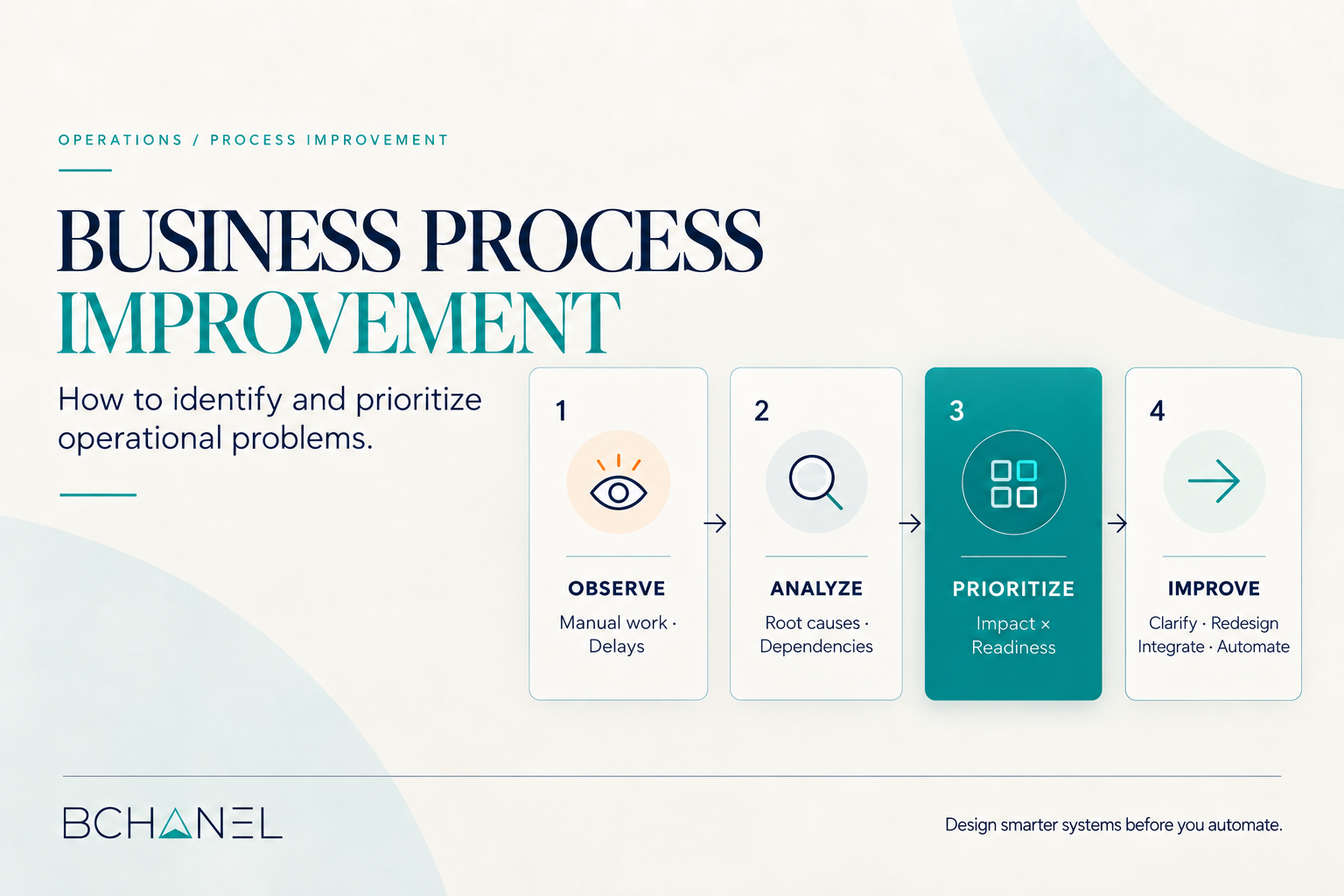
Business Process Improvement: How to Identify and Prioritize Operational Problems
Business process improvement starts with finding the right problem, not buying software. Learn how to spot processes that need attention, separate symptoms from root causes, and decide which operational problem to fix first based on impact and readiness.

Monday.com Workflow Automation: Why Project Visibility Still Requires Clear Ownership
Monday.com can display tasks and automate updates, but reliable project visibility still depends on clear owners, meaningful statuses, defined handoffs, and consistent operating rules.
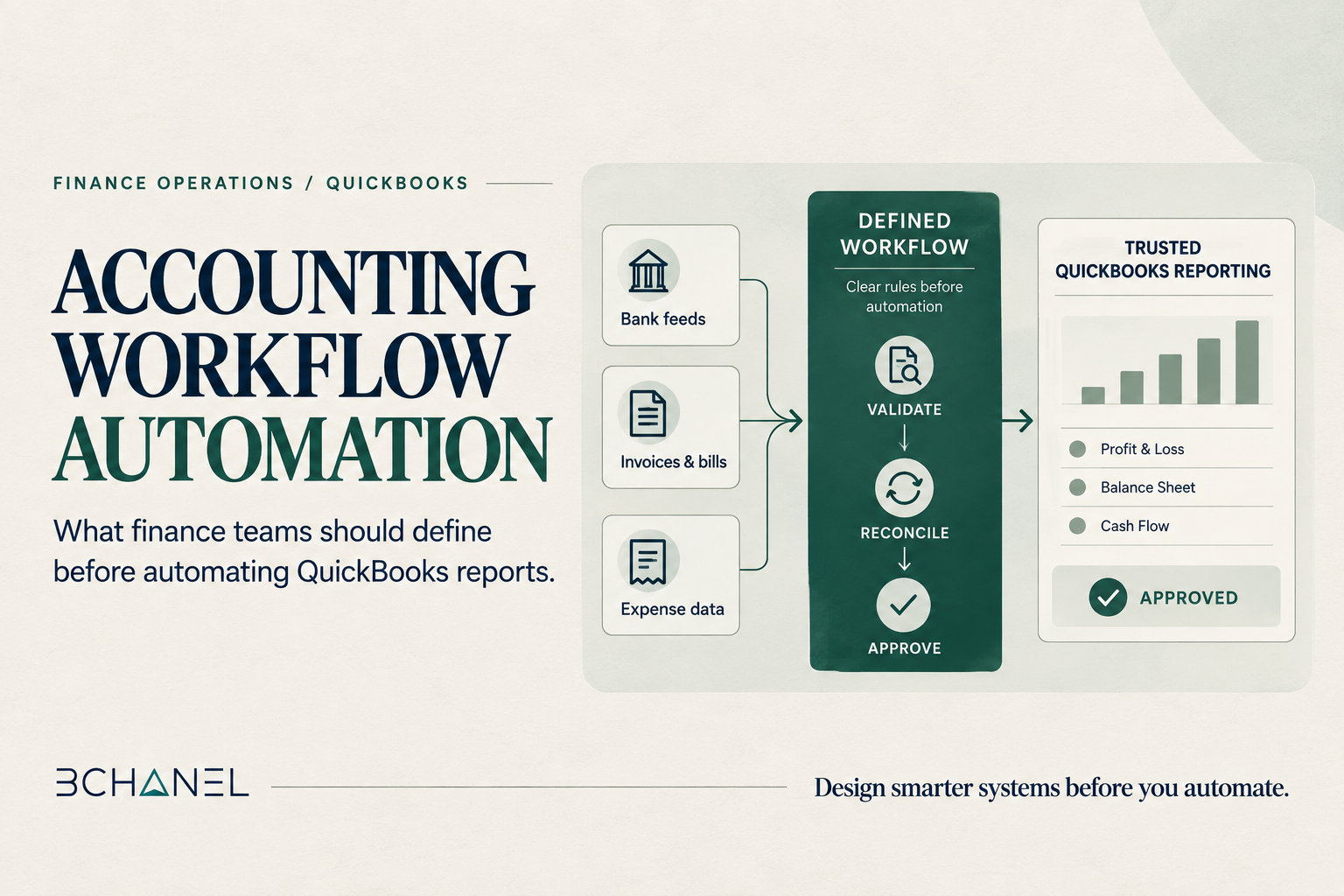
Accounting Workflow Automation: What Finance Teams Should Define Before Automating QuickBooks Reports
Automating a QuickBooks report will not fix unclear ownership, inconsistent data, or weak reconciliation rules. Learn what finance teams should define before using accounting workflow automation to create more reliable financial reporting.
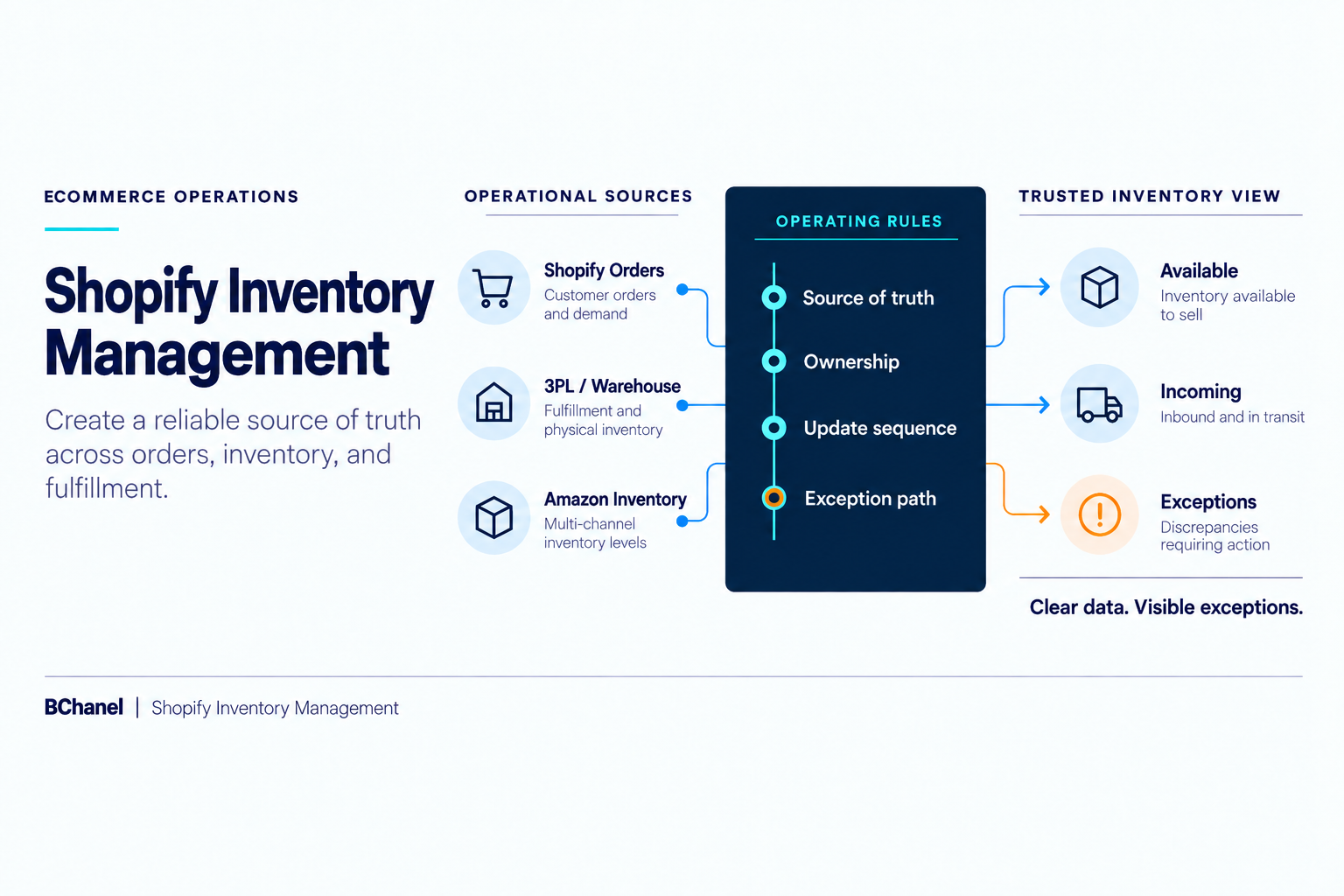
Shopify Inventory Management: How to Create a Reliable Source of Truth Across Orders andFulfillment
Shopify inventory management gets harder as ecommerce operations expand across warehouses, 3PLs, and Amazon. Each system can be working correctly while the business still lacks a clear answer to a basic question: what's actually available, committed, incoming, or at risk? The fix isn't another dashboard — it's defining which system owns each piece of data, standardizing status definitions, and building exception paths for when things go wrong.
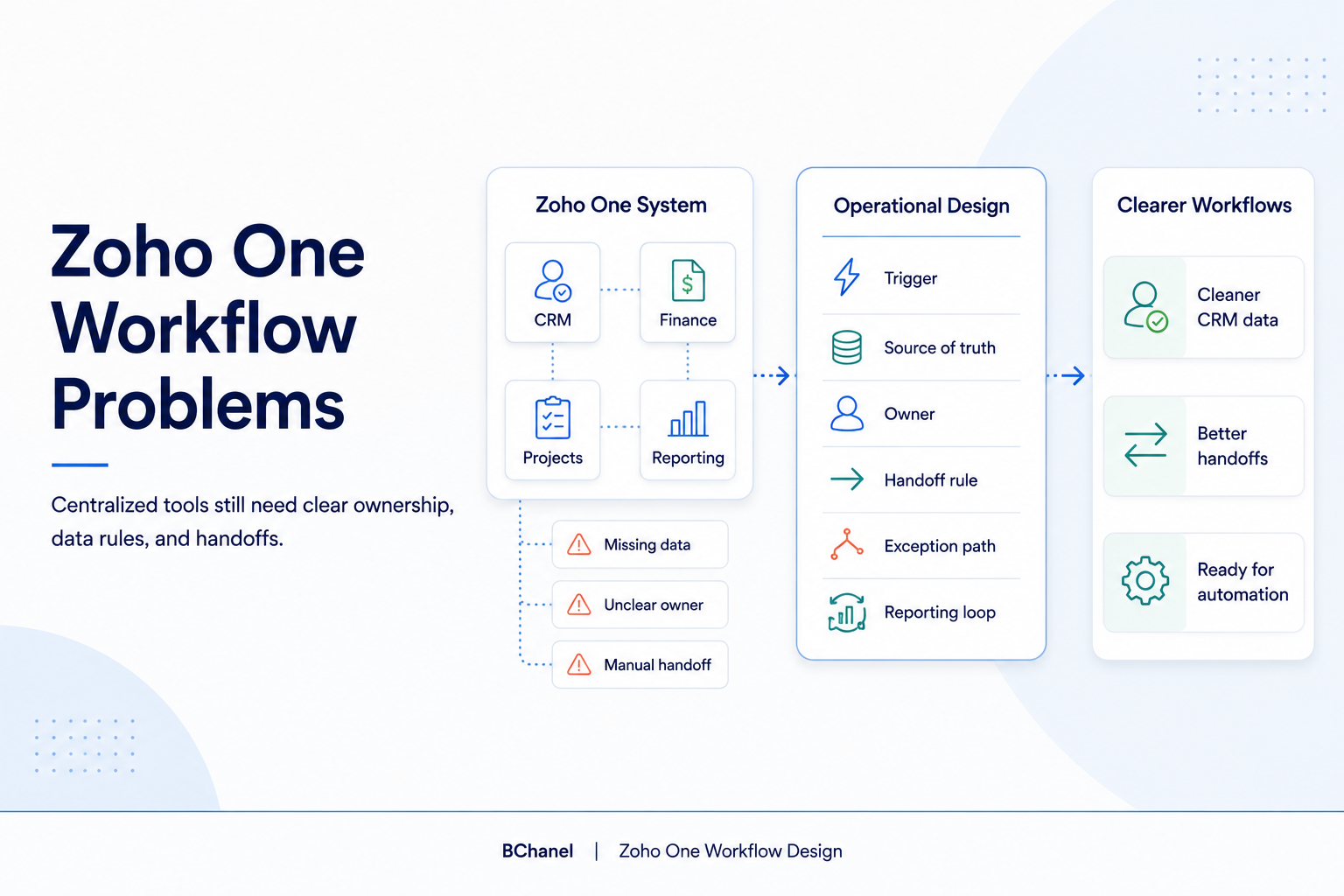
Zoho One Workflow Problems: Why an All-in-One System Still Needs Operational Design
Zoho One can centralize your tools — but without clear ownership, data rules, and handoffs, automation just moves the confusion forward. Here's what to define before adding more workflow rules.

HubSpot Workflow Automation: Why Manual Work Still Happens
HubSpot workflow automation can assign leads, update lifecycle stages, and clean up CRM data — but many teams still end up doing the same manual routing, cleanup, and reporting after it's live. This article breaks down why the problem usually isn't HubSpot itself, and what to define — triggers, ownership, source of truth, handoffs — before adding more automation.

System Design for Growing Operations: How to Connect Tools, Owners, and Workflows
Growing companies rarely need more software—they need better systems. System design for business operations creates the structure that connects people, processes, tools, data, and decisions. By clarifying workflows, ownership, sources of truth, data movement, and visibility before automation, businesses can reduce operational friction, improve reporting, and build workflows that scale reliably.

AI Agent Workflows: What to Define Before Execution
AI agent workflows need clear triggers, owners, approval paths, exception handling, and reporting before agents execute safely.

Business Process Mapping: How to Find Operational Pain Across CRM, Project Tools, Reporting, and Slack
Most tool stacks look strong on paper — CRM, project tools, Slack, reporting dashboards all in place. But operational pain hides between systems, not inside them. This article breaks down how business process mapping surfaces unclear ownership, untrusted data, and broken handoffs before you invest in workflow automation that only moves the problem faster.

Workflow Automation Works Better After Workflow Design
Most teams start automation with a tool-first question — n8n, Zapier, or Make? But the real question comes first: how should the workflow actually move? Without clear ownership, a trusted source of truth, and a defined exception path, automation doesn't fix a messy operation. It just moves the confusion faster.

Why Automation Projects Fail When Operations Are Not Ready
Automation projects rarely fail because of the tool. They fail because the operation underneath — unclear workflows, undefined ownership, unreliable data — was never ready. This article breaks down why automation exposes weak operations instead of fixing them, and what to review before you build.

How to Turn Operational Assessment Findings Into a System Design Roadmap
An operational assessment is only the diagnosis — not the fix. Most businesses stop at the list of problems: disconnected tools, unclear ownership, manual reporting, messy handoffs. This article breaks down how to turn those findings into a system design roadmap that defines ownership, data movement, and visibility before automation or AI agents ever enter the picture — so teams stop guessing at what to build next and start designing the operating system that supports it.

AgenticOS Readiness: Why AI Agents Need Clear Workflows, Ownership, and Reliable Data
AI agents promise less manual work and more leverage, but only when the operating environment around them is clear enough to trust. Before asking what an agent can do, growing businesses need to ask whether their workflows, ownership, and data are ready to support one safely.

Workflow Architecture Examples: Ecommerce Fulfillment and IT Client Onboarding
Manual checks, disconnected systems, and unclear ownership aren't automation problems — they're workflow problems. Using real examples from ecommerce fulfillment and IT client onboarding, this article breaks down why workflow architecture has to come before automation, and what a well-designed workflow should actually clarify.

Manual Reporting Is Usually a Visibility Problem, Not a Spreadsheet Problem
Manual reporting is usually treated as a spreadsheet problem — but it's rarely about the spreadsheet. It's a sign that data is scattered, ownership is unclear, and leadership doesn't have real visibility into what's happening in the business. Before automating the report, it's worth understanding the workflow behind it.

Why Growing Teams Should Run an Operational Assessment Before Automation
Automation feels like the obvious fix when operations get messy — but automating an unclear workflow just moves the confusion faster. Before adding tools, growing teams need an operational assessment: a clear look at where work breaks, who owns each step, which systems hold the truth, and which workflows are actually ready to automate.